

Understanding Keyword Intent
Have you ever created a blog and made it with the correct keywords and still could not rank on Google?
The issue might not be the keyword itself, it might be the keyword intent.
The modern search engines are concerned with what the users are actually seeking when they are searching. Without an appropriate content in accordance with that purpose, it will be hard to rank, despite having good SEO. That is why the interpretation of intent of keywords is one of the most significant aspects of the present-day SEO and keywords research.
This guide will explain what keyword intent is, why it is important, the various types of keyword search intents and how to find it when conducting keyword research in SEO.
What Is Keyword Intent in SEO?
Keyword intent in SEO (also known as search intent in SEO) is the intention of the user making a search query. In simple terms, it responds to the following question:
What is the reason why the user is searching with this keyword?
| Keyword | User Intent |
| What is SEO | Informational Intent |
| Best SEO tools | Commercial Intent |
| Buy SEO course online | Transactional Intent |
Although all these keywords are correlated with SEO, the purpose of the user is different. Such search engines as Google interpret this intent and rank pages that best suit the needs of the user. Therefore, when your content matches the Google search intent, your likelihood of ranking highly is very high.
Why Is It Important?
Understanding the intent of keywords in SEO helps you create content that matches what users actually want.
Here are the key benefits:
- Enhances Google ranking since your content is aligned with the intent of the search.
- Gets more organic traffic by the relevant users.
- Enhances user interaction as visitors get what they want.
- Minimizes the bouncing rate as users spend more time on pages that are of use.
- Increases conversions via users who are prepared to engage .
For example:
When a person types in a question like buy running shoes online, then he or she wants to buy. Presenting them with a product page will not fulfill the purpose of displaying a blog article. That is the reason why it is important to know search intent in SEO.
Types of Intent in SEO
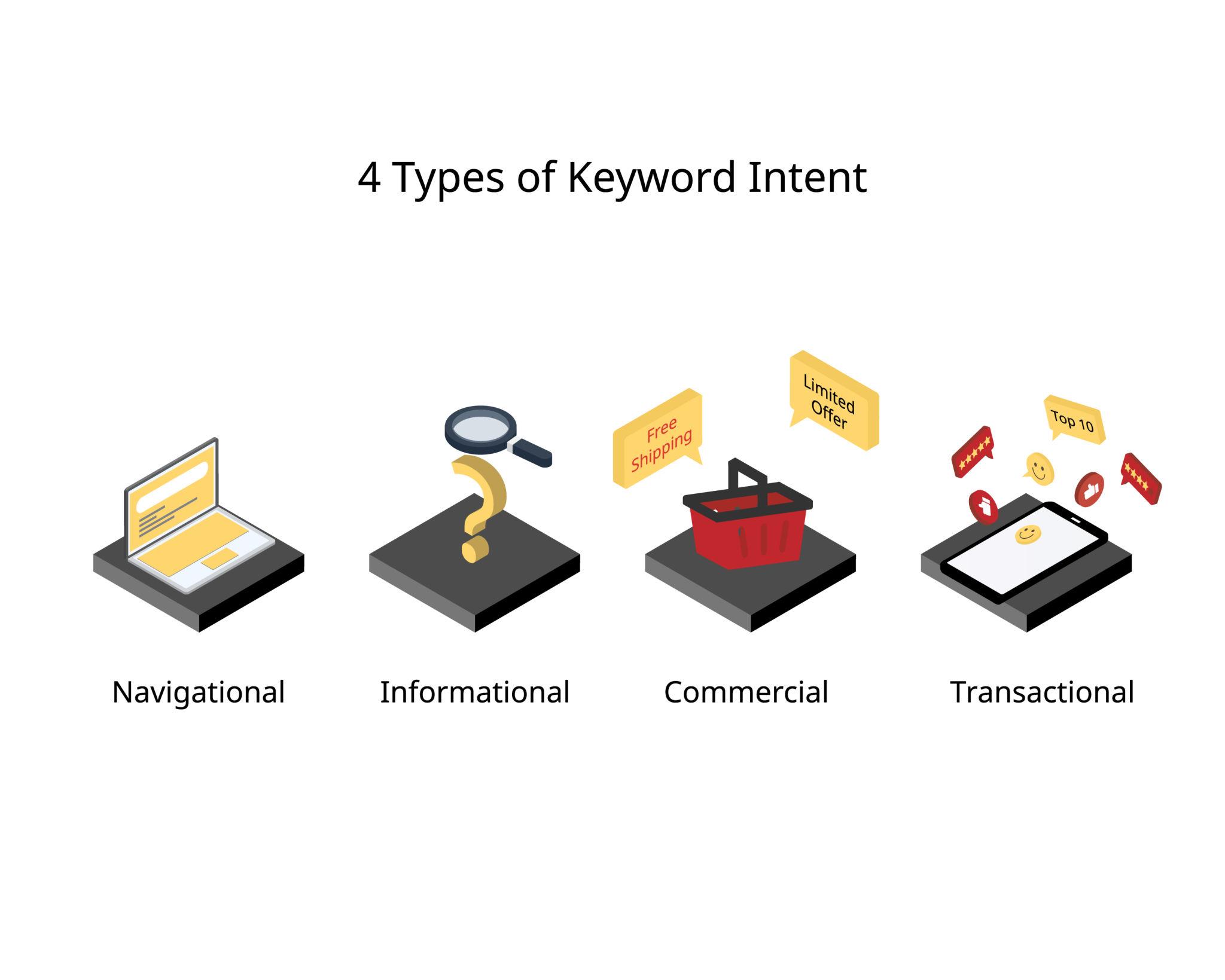
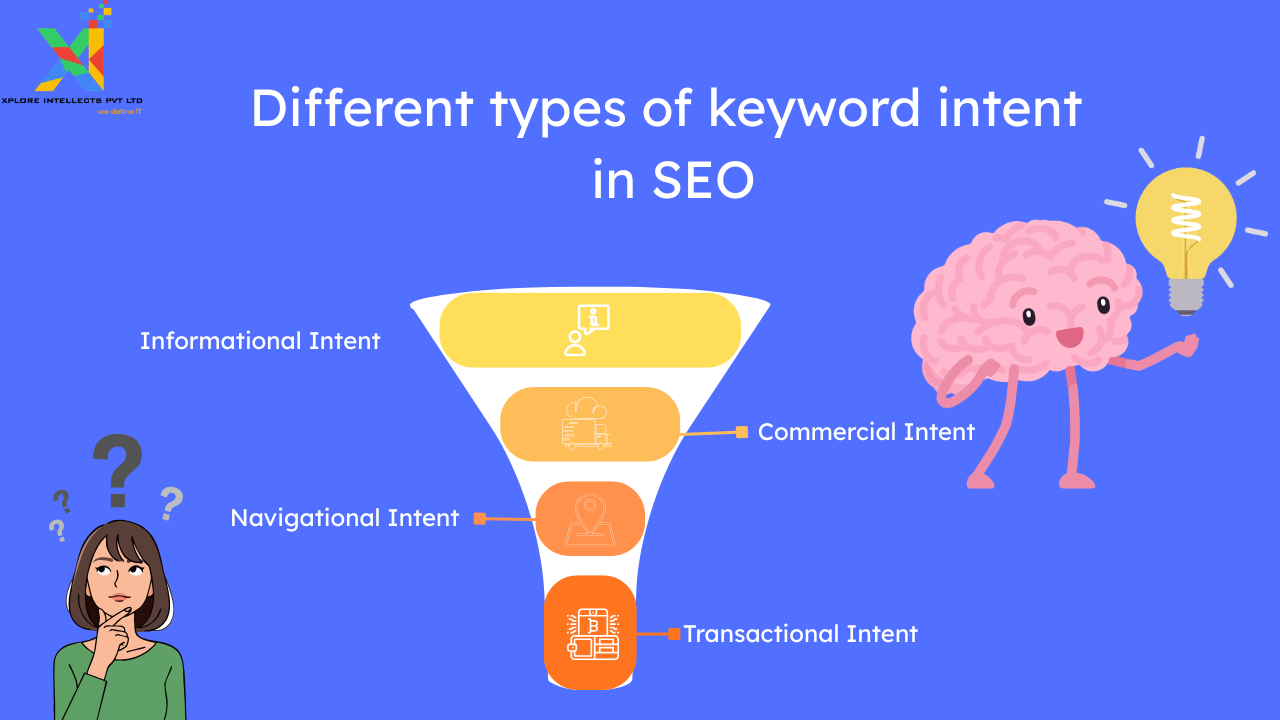
In SEO, intent is usually divided into four main types. Understanding these keyword intent types helps you decide what kind of content to create.
1. Informational Intent
This is when users want to learn something or get information. These searches usually include words like:
- What
- How
- Guide
- Tips
- Tutorial
Examples:
- What is SEO
- How to do keyword research
- SEO keyword search intent examples
Best content format:
- Blog posts
- Guides
- Tutorials
- Educational articles
Example:
A blog explaining “how to find search intent” fits informational intent perfectly.
2. Navigational Intent
In this case, users are trying to find a specific website or brand.
Examples:
- Facebook login
- Amazon website
- YouTube homepage
Users already know where they want to go. They simply use a search engine to reach that page faster.
Example:
Searching Google Keyword Planner Tool is often navigational because users want to access that specific tool from Google.
3. Commercial Intent
Users with commercial intent are researching products or services before making a purchase. They compare options and read reviews.
Examples:
- Best keyword research tool
- Top SEO tools
- Ahrefs vs SEMrush
Common keywords include:
- Best
- Top
- Review
- Comparison
Best content format:
- Product comparisons
- Review articles
- “Best tools” lists
This type of intent plays a huge role in keyword research SEO strategies.
4. Transactional Intent
Transactional intent means the user is ready to take action, such as buying or signing up.
Examples:
- Buy SEO course
- Download SEO tool
- Hire SEO expert
These keywords often include:
- Buy
- Order
- Download
- Get
- Hire
Best content format:
- Product pages
- Service pages
- Landing pages
Targeting these keywords can lead directly to conversions or sales.
Best Practices to Optimize Content
Understanding the intent of keywords is just the first step. You also need to align your content with the correct search intent and broader strategies like types of SEO in digital marketing.
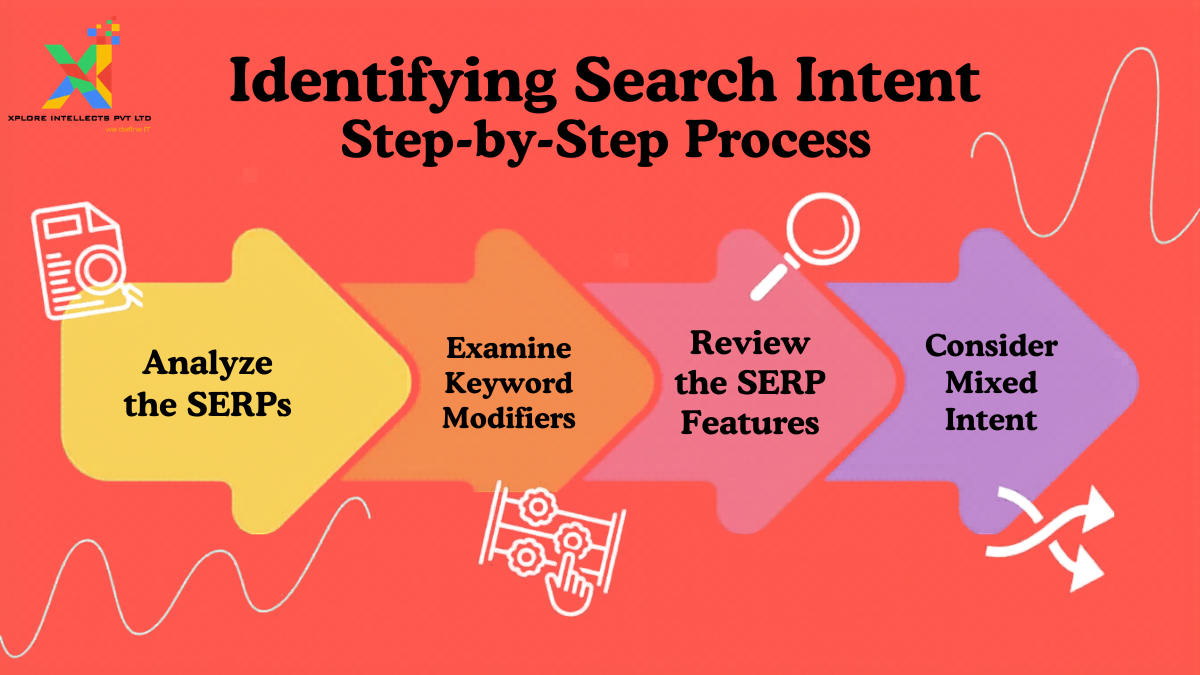
1. Analyze the Google Search Results
Before writing content, search the keyword on Google. Look at the top ranking pages. Check whether they are:
- Blogs
- Product pages
- Comparison guides
- Videos
This reveals the Google search intent for that keyword.
2. Match the Content Format
Different intents require different content formats.
Example:
| Intent | Best Content Type |
| Informational | Blog post |
| Navigational | Brand page |
| Commercial | Comparison article |
| Transactional | Product page |
Always match your content format to the keyword’s intent.
3. Use Keyword Variations Naturally
Avoid keyword stuffing. Instead, include variations like:
- search intent in SEO
- Keyword search intent types
- keyword research SEO
- how to find search intent
This helps search engines understand your content better.
4. Answer the User’s Question Clearly
Google prioritizes helpful content. Make sure your article:
- Solves the user’s problem
- Provides useful insights
- Includes examples
If users find your page helpful, rankings improve naturally.
For businesses that want to implement these strategies effectively, working with an experienced SEO company in Coimbatore can make the process easier. Agencies like Xplore Intellects help businesses identify the right keyword intent and build content strategies that align with Google search intent.
Common Mistakes to Avoid
Many beginners struggle with SEO because they misunderstand keyword’s intent. Here are some common mistakes:
Targeting the Wrong Intent
Example:
Trying to rank a blog post for a transactional keyword.
Solution:
Always analyze the search results first.
Ignoring Search Results
Some people pick keywords from tools without checking actual search intent. But search engines determine intent based on existing results. Always review the SERP before creating content.
Overusing Keywords
Keyword stuffing can harm readability and SEO. Instead of repeating keyword too often, use semantic variations naturally.
Creating Generic Content
Content that does not provide unique insights often fails to rank. Always add:
- Examples
- Practical tips
- Real explanations
This aligns with Google’s Helpful Content system.
Tools to Identify the Intent
Several SEO tools help analyze keyword intent in SEO and keyword research. Here are some popular ones.
1. Google Keyword Planner
The Google Keyword Planner is a free tool from Google. It helps you:
- Discover keywords
- Analyze search volume
- Understand keyword opportunities
However, it does not directly show intent, so you must analyze the SERP manually.
2. SEO Keyword Research Tools
Advanced tools can make keyword research SEO easier. Popular tools include:
- Ahrefs
- SEMrush
- Ubersuggest
These tools help you:
- Identify keyword opportunities
- Analyze competition
- Find related keywords
They also provide insights that help determine search intent.
3. Google Search Results
Sometimes the best tool is simply Google itself. Look at:
- Featured snippets
- People Also Ask questions
- Top ranking pages
These give strong clues about Google search intent.
Conclusion
Learning about the intent of keywords in search engine optimization is crucial in producing content that really fulfills their users. Modern SEO involves more than just the use of keywords; it involves having a clue as to why individuals search in the first place.
Keep in mind the following:
- Keyword intent is the intent behind the search query.
- There are four main keyword intent types.
- Associating your content with Google search intent enhances rankings.
- Keywords research is more effective with proper intent analysis.
When you correlate your content with the correct intent, you will have a much stronger and user-oriented SEO strategy.
And in the modern search environment, useful information that fulfills user intent is always a winner.
FAQ
What is keyword intent in SEO?
It refers to the purpose behind a search query. It explains why a user searches for a specific keyword and what type of content they expect to find.
What are the types of keyword intent?
There are four main types of intent:
- Informational intent
- Navigational intent
- Commercial intent
- Transactional intent
Each represents a different stage of the user’s search journey.
Why is search intent important for SEO?
Search intent is important because search engines rank pages that best satisfy user intent. If your content matches the intent behind a keyword, it has a higher chance of ranking.
How can I identify the Intent?
You can identify by:
- Analyzing Google search results
- Studying the top ranking pages
- Using SEO keyword research tools
- Looking at keyword modifiers like buy, how, or best.
What is an example?
For example:
- What is SEO → Informational intent
- Best SEO tools → Commercial intent
- Buy SEO software → Transactional intent
Each keyword reflects a different user goal.