


When someone launches a website, one of the first questions they ask is: “why isn’t my site ranking in Google?”
In most cases, the issue is reduced to the on-page SEO. With all this content and design, it is easy to lose the understanding of the search engines of what your pages are all about with poor optimization.
A properly organized on page checklist should be used to make sure that all the pages in your site are using the best practices of SEO. Once correctly used, it improves search visibility, user experience and content clarity.
This guide will instruct you on a handy check list that a beginners in web designs, web developments and entrepreneurs need to follow in order to make sure that they maximize their websites and are ranked highly on search engines.
What Is an On Page Checklist in SEO?
The checklist refers to a structured set of steps used to optimize individual web pages so search engines can better understand and rank them.
Unlike off-page SEO, which focuses on external factors such as backlinks, on-page SEO focuses on elements that exist directly within your website.
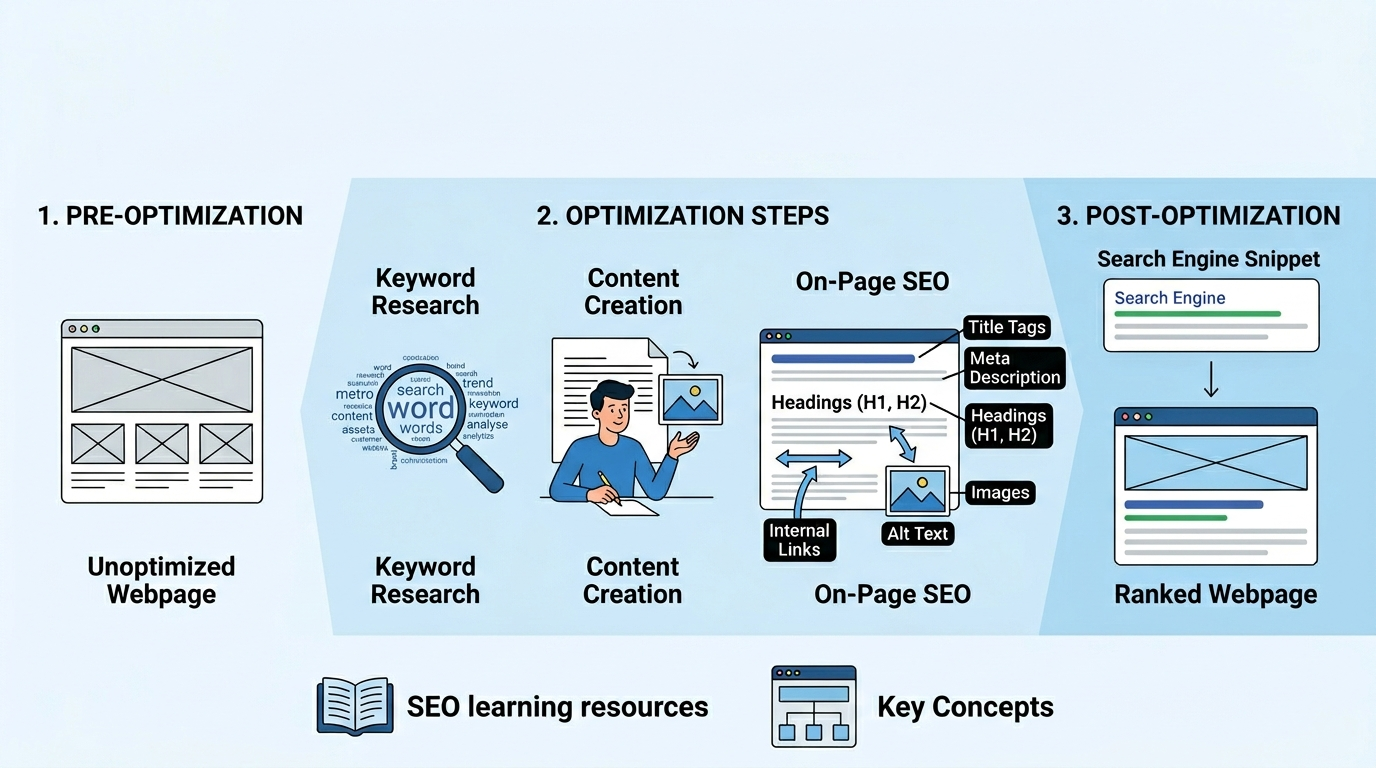
A typical SEO on page optimization checklist includes:
- Title tags
- Meta descriptions
- Heading structure
- Content quality
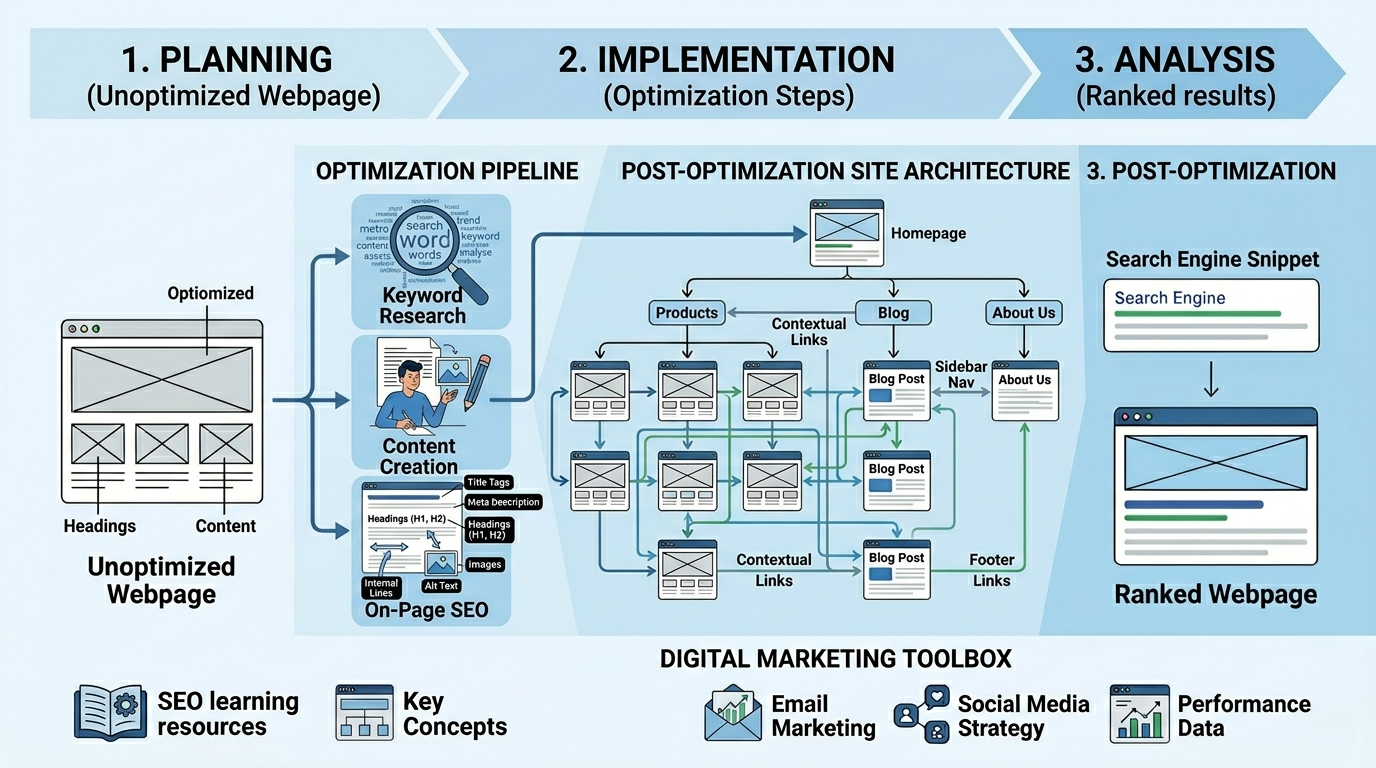
- Internal linking
- Image optimization
- Page speed and performance
When these elements are properly optimized, search engines can clearly interpret your content and match it with relevant search queries.
Why an On Page Checklist Matters for SEO Rankings
The ranking of webpages is done through a hundred plus signals and analyzed by the search engines and on-page optimization is one of the most manipulable factors in search visibility.
By following a systematic on page optimisation checklist search engines:
- Know what your page is all about.
- Evaluate the relevance of your content
- Measure the quality of the user experience
To companies that are attempting to increase organic traffic, an explicit SEO on page optimization checklist would go a long way in enhancing page ranking within search engines.
Most companies also engage skilled experts like Xplore Intellects to make sure that their websites are based on organized SEO tactics and the new-day search engine rules.
Simple On Page Checklist for Website Optimization
On page checklist is provided below, and can be used to optimize any webpage.
1. Have a Simple and Keyword Rich Page Title
Among others, the most significant items in an SEO on page optimization checklist are the title tag.
A title to be optimized must:
- Include the primary keyword naturally
- Clearly describe the page topic
- Stay within recommended length limits (50–60 characters)
A strong title improves both search engine understanding and user click-through rates.
2. Write an Engaging Meta Description
Meta descriptions influence how users interact with your search result.
A strong description should:
- Clearly explain what the page offers
- Encourage users to click
- Include relevant keywords naturally
Even though meta descriptions are not a direct ranking factor they have a significant effect on the click through and search visibility.
3. Use Proper Heading Structure
An appropriate heading structure is a necessary section in any on page optimisation checklist.
Typical heading hierarchy:
- H1: Main topic of the page
- H2: Major sections
- H3: Supporting information
Categorized headings simplify your content to read, grasp and search engines.
4. Optimize Content for Users First
High-quality content is the foundation of any effective SEO on page optimization checklist.
Focus on:
- Answering user questions clearly
- Providing useful explanations
- Structuring information logically
Avoid keyword stuffing and prioritize helpful, informative content that solves real user problems.
5. Place Internal Links to Related Pages.
Internal links assist the search engines to know how your site is structured.
Benefits include:
- Improving crawlability
- Distributing page authority
- Helping users discover related content
For example, a blog discussing an on page checklist could link to related pages about keyword research, technical SEO audits, or content strategy.
6. Search Engine optimization of the images
Photos are better at engaging, however, they should be search engine optimised too. Important practices include:
- Reducing the size of the pictures to enhance speed.
- Naming of descriptive files.
- Including an alt text in order to be accessible and searchable.
Image optimization also supports broader technical SEO audit checklist practices.
Search engines evaluate many ranking signals before showing results. Understanding how Google ranks local businesses helps you align your on-page optimization with search algorithms.
7. Improve Page Loading Speed
Page speed is an important ranking factor and a key part of any technical SEO audit checklist.
Slow pages can increase bounce rates and reduce user engagement.
Ways to improve page speed include:
- Compressing images
- Using browser caching
- Reducing unnecessary scripts
Fast websites provide a better experience for users and search engines alike.
8. Ensure Your Website Is Mobile-Friendly
Today, most users browse websites on mobile devices.
Search engines prioritize mobile-friendly websites, meaning your pages should work well on:
- Smartphones
- Tablets
- Desktop computers
Responsive design ensures that your website remains accessible and easy to navigate across all devices.
9. Focus on User Experience (UX)
User experience signals are increasingly important for SEO.
A good UX includes:
- Simple navigation
- Clear content structure
- Fast loading pages
- Minimal distractions
Positive user engagement signals help search engines recognize that your content provides real value.
10. Keep Content Fresh and Updated
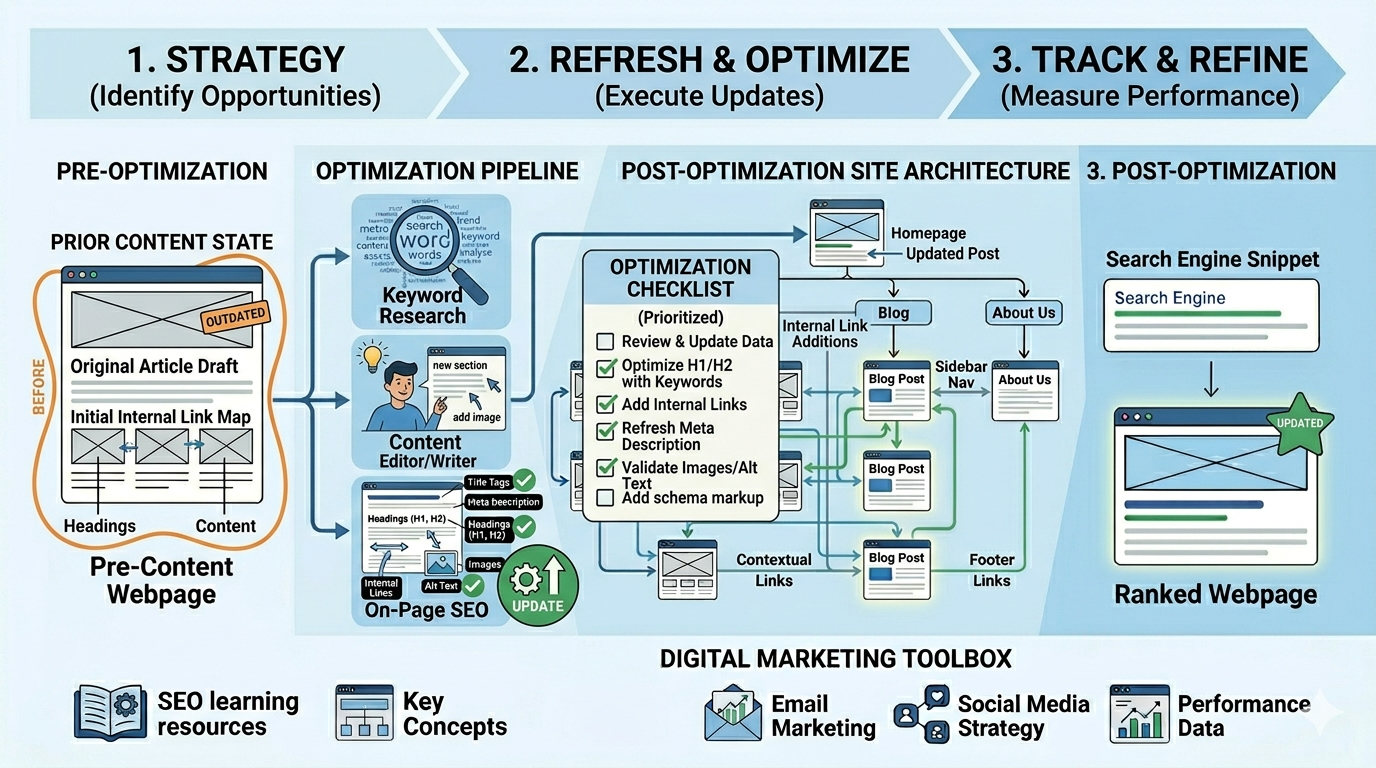
Regular updates are an important part of any SEO on page optimization checklist.
Updating content helps:
- Maintain accuracy
- Improve search relevance
- Strengthen long-term rankings
Fresh content signals to search engines that your website remains active and authoritative.
Common On Page SEO Mistakes Beginners Make
Even small errors can affect search performance. Some common mistakes include:
- Keyword stuffing
- Duplicate content
- Missing meta descriptions
- Broken internal links
- Poor content structure
Avoiding these issues ensures your website follows a proper on page optimisation checklist and aligns with modern SEO best practices.
Quick On Page SEO Checklist Summary
If you want a quick overview, here is a simple on page checklist you can follow for every webpage:
- Use a keyword-focused title tag
- Write a compelling meta description
- Maintain a clear heading structure (H1, H2, H3)
- Create high-quality user-focused content
- Add internal links to relevant pages
- Optimize images with alt text and compression
- Improve page loading speed
- Ensure the site is mobile friendly
- Focus on better user experience
- Update content regularly
Following this SEO on page optimization checklist helps search engines understand your website better and improves your chances of ranking higher in search results.
Conclusion
A strong website combined with an optimized Google Business Profile significantly improves local search visibility and one of the surest methods of enhancing the performance of your website in terms of SEO is to follow a structured on page checklist. Concentrating on the quality of the content, technical optimization and user experience, you can create pages that can be perceived by search engines and which can be trusted by users.
In the long run, a solid SEO on page optimization checklist will assist your site to achieve better visibility and better ranking and long term organic traffic growth. The companies that are interested in adopting advanced SEO measures usually engage the services of SEO experts in coimbatore such as Xplore Intellects, in order to make sure that their websites are operating according to the best practices in the industry and are not left behind in the search results.
Frequently Asked Questions
1. What is on-page SEO?
On-page SEO refers to the effort put into optimizing the elements of your webpage, including: content organization, headings, tags, and internal links, to make your webpage pages to be ranked higher in the search engine results.
2. Will on-page optimization enhance ranking?
Yes! When properly applied, well optimized on-page content will assist the search engines to get a better idea of the relevance of the pages of your site, and thus it will have a far higher possibility of ranking in the search results.
3. How often would I refresh my web page?
Ideally, you are supposed to update your more important pages in the site after every few months to maintain relevance and to have more ranking power.
4. What is the distinction between on and off-page SEO?
On-page SEO is concerned with what is on your site whereas off-page is concerned with what is outside your site and includes backlinks and social media credibility.
5. Is it possible that a person who is new to SEO can do on-page SEO?
Absolutely! Any beginner in the field of SEO can use a structured checklist and constant practice to develop an effective practice of conducting on-page optimizations.